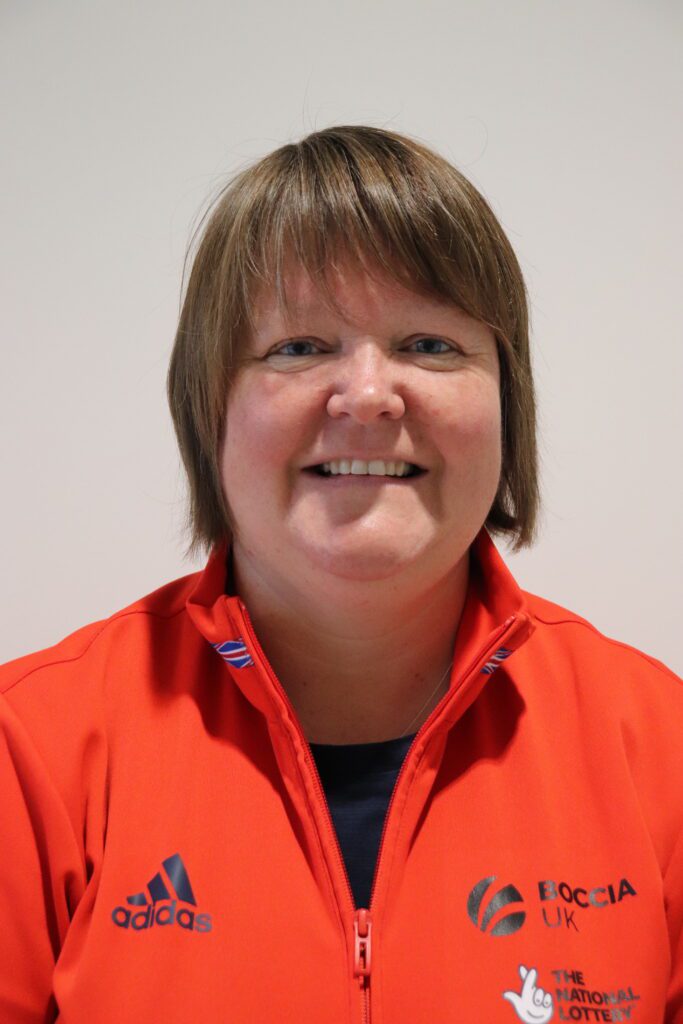
Claire Morrison never set out to become one of the most respected performance coaches in Paralympic sport. In fact, her journey into boccia began with a quiet realisation rather than a grand ambition.
After finishing university, Morrison was working for Scottish Disability Sport, delivering training courses and introducing others to sports such as boccia. The irony was not lost on her.
“I spent all this time telling people how to play boccia,” Claire told Fen Regis Trophies. “Then realised I wasn’t actually doing it myself.”
That moment of self-awareness changed everything. A conversation with a friend, who was then head coach of the Scottish and GB boccia squads, led to a simple question: could she volunteer? She could. And she did.
What followed was the beginning of a journey that has now spanned more than 20 years, four Paralympic Games, and national recognition as Coach of the Year 2024 by Scottish Women in Sport.
Finding Her Way in Boccia
Morrison’s first steps into the sport were far from glamorous. She began volunteering alongside a small group of young athletes who had been identified as having potential. Together, they learned, developed, and made mistakes.
“We all went on a journey together,” she says. “I was learning as much as they were. That experience gave me the space to grow as a coach.”
What started as curiosity quickly became commitment. Morrison fell in love with boccia, not just for what it is as a sport, but for what it represents.
A Sport Built on Inclusion
Boccia is one of only two Paralympic sports without a mainstream equivalent. Designed specifically for athletes with physical disabilities, it shares visual similarities with bowls, but its identity is entirely its own.
What excites Morrison most is how adaptable it is.
“Competitively, it’s for athletes with physical disabilities,” she explains, “but at a participation level, anybody can play. People with visual impairments, learning disabilities, older adults, even able-bodied players. The sport adapts to the person.”
At elite level, the complexity is striking. Athletes may throw with their hands, feet, or use a ramp. Precision, tactical awareness, and consistency are everything.
“When you see what athletes can do with the bodies they have, it’s phenomenal. Matches are decided by millimetres. The skill level is extraordinary.”
Coaching the Individual, Not the Textbook
Morrison is clear that boccia resists rigid coaching models. While there are familiar technical phases, such as preparation and delivery, there is no single correct way to perform a skill.
“I’ve never competed in boccia myself,” she said. “I don’t know what it feels like to experience a spasm during a throw. So, I rely heavily on listening and questioning.”
That athlete-led approach is central to her philosophy.
“I don’t tell beginners how to throw a ball. I explore how they already throw it. They’ve spent their whole lives adapting, so why wouldn’t we build on that?”
For Morrison, coaching boccia is about fitting the sport around the athlete, not forcing the athlete into a predefined shape.
Moments That Matter
Despite working at the highest level of sport, Morrison measures success in more than medals.
One of her proudest achievements dates back to those early days as a volunteer, working with a small group of young athletes. Three of them would later compete at the Rio Paralympic Games.
“I wasn’t coaching them all by that point, but having been part of their journey from the very beginning meant everything.”
She speaks just as passionately about smaller milestones. A first international win. A skill executed successfully under pressure. These moments, she says, are just as meaningful.
Still, some achievements inevitably stand out. Stephen McGuire’s gold medal in Paris was one of them.
“That was an incredible journey,” Morrison reflects. “But what made it special was sharing it with people who had influenced us both years earlier. No one reaches those moments alone.”
Inside the Paralympic Experience
Having attended four Paralympic Games, Morrison insists the sense of awe never fades.
“Every time, it still blows my mind.”
What makes the Paralympics unique is perspective. The performances on the court are only part of the story.
“You see athletes navigating daily life in the village, managing complex disabilities, and then delivering under the biggest pressure imaginable. It changes how you view performance.”
She credits London 2012 with transforming public perception.
“It shifted the focus from disability to sport. The standards now are phenomenal. You’re surrounded by the very best, and that’s incredibly inspiring.”
Living with Self-Doubt
Despite her experience and accolades, Morrison speaks openly about imposter syndrome.
“Oh, absolutely,” she says without hesitation.
Even after stepping into a full-time performance role, she questioned herself.
“I thought I had to become this version of a performance coach I’d read about. Then I realised that authenticity mattered far more.”
That self-questioning has never fully gone away, and she sees that as a positive.
“Sport keeps changing. Athletes change. Environments change. A bit of doubt keeps you learning and keeps you grounded.”
Recognition Shared, Not Owned
In 2024, Morrison was recognised across multiple award ceremonies. While the honours were deeply meaningful, what mattered most was who she shared them with.
“My husband came to one awards night, my mum to another. They support me being away so much. It felt important that they were part of those moments.”
Once again, she returns to a familiar theme.
“We don’t do this on our own.”
Looking Ahead
The future is already moving quickly. With World Championships in Korea and the road to Los Angeles well underway, Morrison remains focused on growth rather than outcomes.
“Boccia is still a sport many people don’t know exists,” she says. “There are potential athletes out there who don’t realise this is something they could love.”
For herself, the goal is simple.
“I want to keep learning, keep helping athletes grow, and keep enjoying the work. If that leads to a fifth Paralympic Games, that would be amazing. But we’ll take it one year at a time.”
In a sport where adaptability defines success, Claire Morrison’s approach feels perfectly fitting. Quietly assured, deeply reflective, and unmistakably human.
By Aaron Gratton